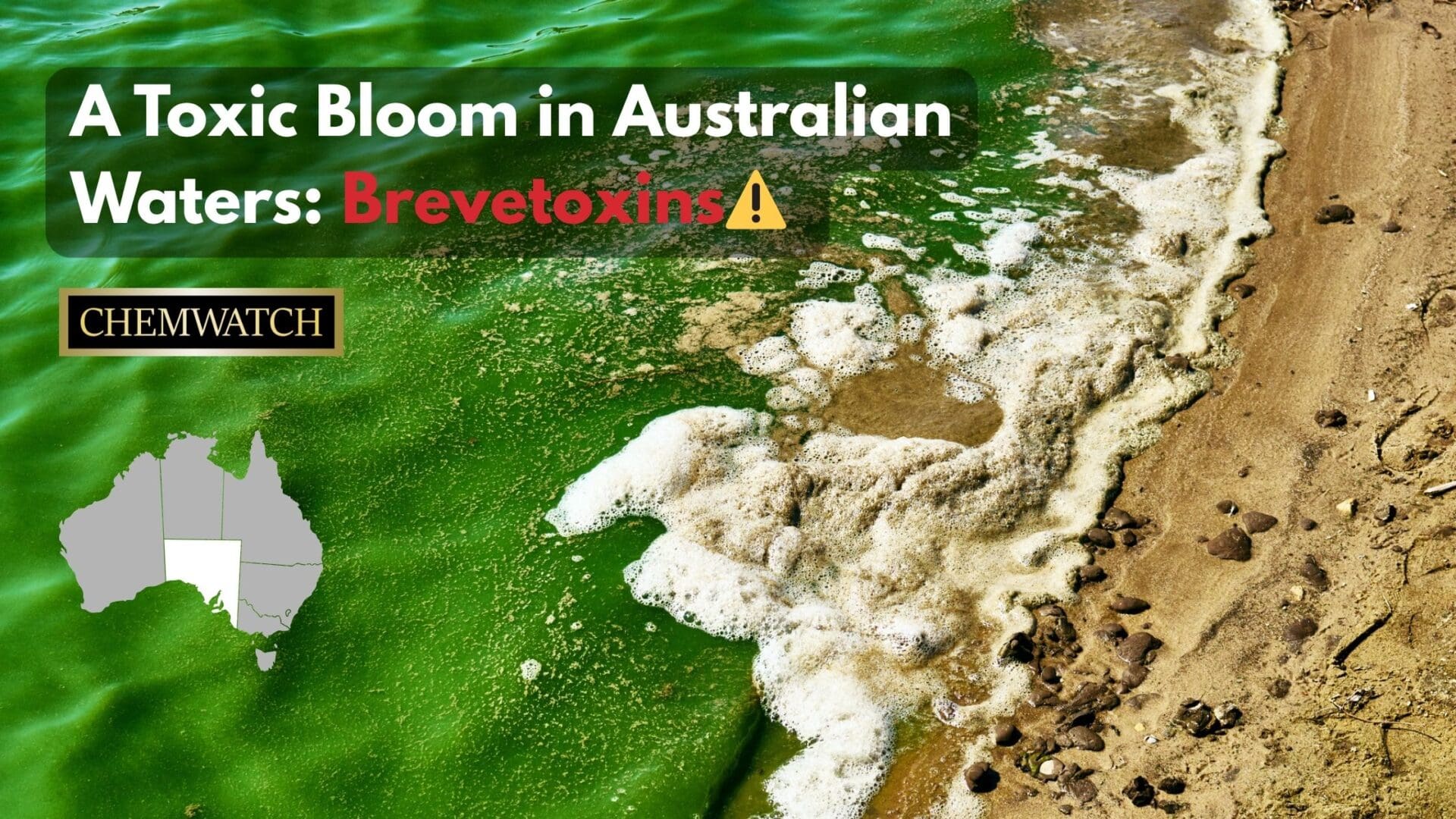
Imagine standing on a familiar beach and noticing eerie yellow-green foam lapping at the shore. Dead fish wash in by the hundreds. Your eyes sting. Your throat feels scratchy. You haven’t touched the water… you’ve just breathed the air.
That has been the lived reality for many communities during the South Australia algal bloom, one of the most destructive harmful algal bloom events recorded along the state’s coastline. At the centre of this crisis are brevetoxins, potent marine toxins produced by a microscopic alga now strongly associated with the event: Karenia cristata.
This article breaks down what brevetoxins are, why they matter, and what science and public health guidance suggest about exposure pathways, algal bloom health effects, and shellfish poisoning risks.
The South Australia algal bloom was first observed in mid-March 2025 near Waitpinga and Parsons beaches on the Fleurieu Peninsula. It expanded into an unprecedented harmful algal bloom affecting a significant stretch of coastline and triggering widespread marine mortality, including highly visible fish deaths via algal bloom events.
Early on, the bloom was linked to another Karenia species, but subsequent sampling and analysis shifted attention to Karenia cristata as a dominant organism across numerous sites. Globally, toxin-producing blooms involving K. cristata have been rarely documented, making this event both unusual and challenging to monitor.
So, what are brevetoxins? Brevetoxins are naturally occurring, lipid-soluble polyether neurotoxins (fat-soluble, not water-soluble). They interfere with how nerve cells signal, which is why they can cause symptoms even without direct contact with the water.
Chemically, brevetoxins are complex fused-ring molecules, with multiple known variants. Different variants can differ in potency, persistence, and how they behave in organisms, especially once they enter food chains.
Brevetoxin risk depends on dose and exposure route. While ingestion and inhalation can both be significant, inhalation is often underestimated because people assume “if I didn’t swim, I’m safe.” In reality, waves and wind can aerosolise marine toxins.
Key risk points include:
There are two main routes of exposure during a brevetoxin-producing harmful algal bloom: inhalation of aerosolised toxins and ingestion through contaminated shellfish.
Breathing aerosolised brevetoxins can trigger algal bloom symptoms such as:
This is why “I was just walking the beach” can still lead to noticeable effects. People with asthma, emphysema, bronchitis, or other lung conditions are generally more vulnerable to algal bloom health effects, especially when there’s an onshore breeze.
Eating contaminated shellfish can cause neurotoxic shellfish poisoning, one form of shellfish poisoning associated with brevetoxins. Symptoms may include:
If symptoms are severe or persistent, seek medical attention.
Brevetoxins are not industrial pollutants, they’re natural marine toxins produced by certain Karenia species. Internationally, the most widely known brevetoxin events are associated with Florida “red tide.” In Australia, the term red tide Australia is sometimes used conversationally when coastal blooms cause visible foam, irritation, or fish kills, though the species and toxin profile can vary.
Globally, brevetoxin-producing blooms have been linked to:
This context matters because it shows that toxin-producing algal blooms are a known hazard class, yet still difficult to predict in timing and severity.
Brevetoxins didn’t appear due to a chemical spill. The organisms that produce them can exist naturally at low levels. What changes is the environment: nutrients, temperature, currents, and weather.
Large, persistent blooms are often supported by a mix of:
These drivers also explain why fish deaths algal bloom events can be sudden and severe, and why climate variability increases concern about future bloom frequency and intensity.
A common question is: is seafood safe algal bloom conditions? The safest rule of thumb is:
Because shellfish can bioaccumulate brevetoxins, foodborne exposure may persist even after surface waters look “normal.”
If you’re near an active South Australia algal bloom area:
This event is a reminder that chemical hazards don’t only come from factories, laboratories, or transport incidents. A harmful algal bloom can generate naturally occurring marine toxins with exposure pathways that look like an airborne chemical event, especially when toxic sea air / breathing toxins becomes a real-world risk.
Brevetoxins present unique challenges:
The chemicals making beaches hazardous during the South Australia algal bloom are naturally produced neurotoxins, not industrial contaminants. But that doesn’t make them less serious. Brevetoxins associated with Karenia cristata can contribute to large-scale marine mortality, human irritation and respiratory symptoms, and foodborne risk through shellfish poisoning.
As climate and ocean conditions continue to shift, events like this may become more frequent or affect new coastlines. Understanding what are brevetoxins, recognising algal bloom symptoms, and following guidance on is seafood safe algal bloom conditions are key steps in protecting communities, workers, and ecosystems.
Chemwatch helps organisations manage chemical risk beyond traditional industrial settings by supporting strong hazard communication and decision-making. From guidance on exposure pathways and incident response planning to tools that improve access to safety information, Chemwatch supports teams in building a clearer picture of emerging hazards so communities and workplaces can respond faster, communicate better, and reduce preventable harm.
Resources