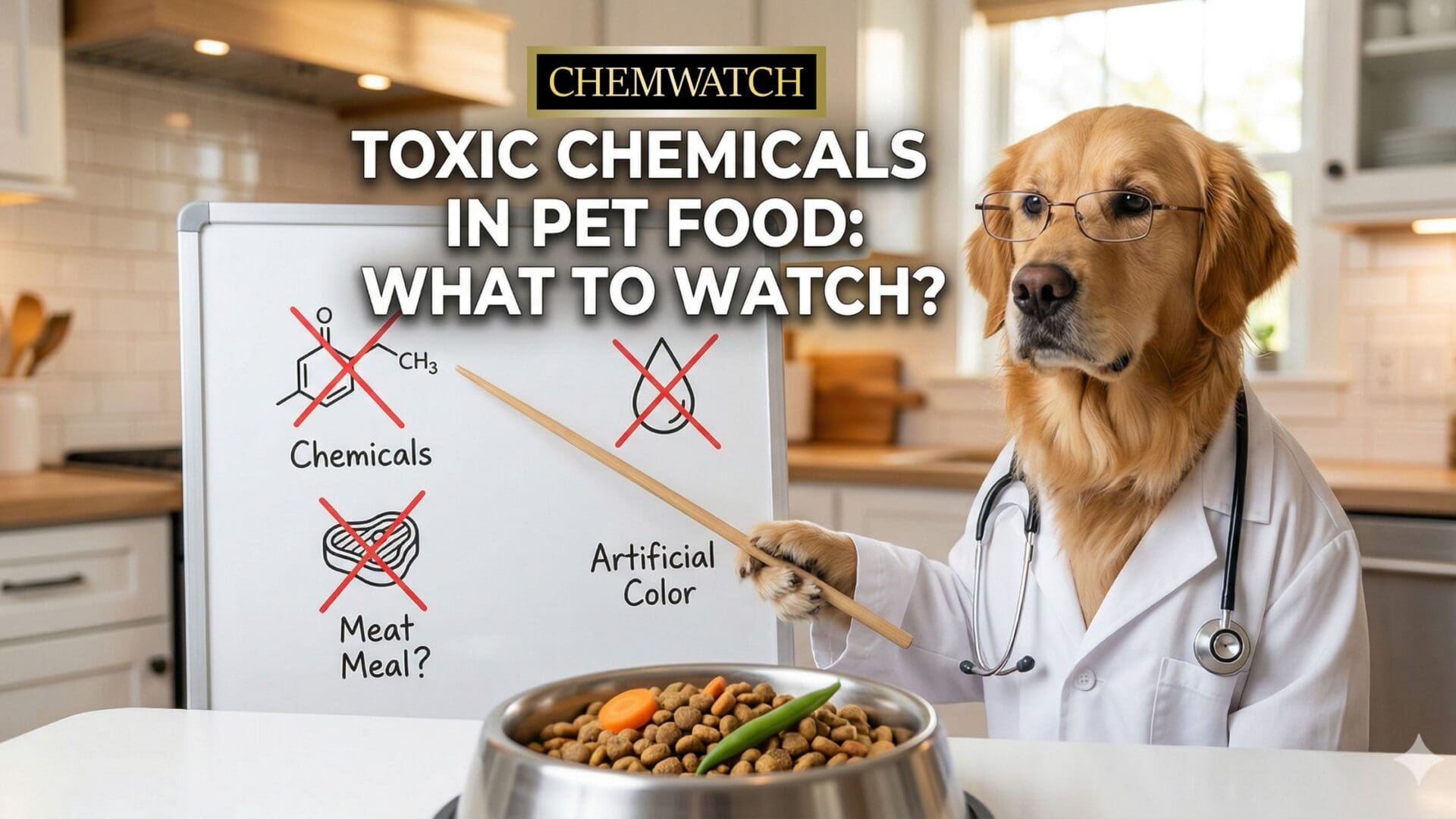
As pet owners, we treat our furry companions like family. They bring so much love and laughter into our lives that most of us want to give them the best-beds, toys, leashes, and especially food. Many people assume “premium” or “vet-recommended” wet foods are the gold standard. But recent research and testing reports have raised fresh concerns about pet food safety, pointing to PFAS in pet food and other toxic chemicals in pet food, including heavy metals and packaging-related contaminants.
The key message isn’t panic. It’s awareness: understanding where contamination can enter the supply chain, and what practical choices can reduce risk.
Investigations have increased focus on PFAS in pet food, a large class of man-made “forever chemicals” used to repel grease and water in certain materials (including some food packaging applications). PFAS are called “forever chemicals” because they persist in the environment and can accumulate over time.
Some studies exploring PFAS exposure in household pets suggest dogs and cats may carry measurable PFAS burdens, potentially because of how consistently they eat the same foods every day. That’s why pet food safety experts are now treating PFAS as more than an environmental issue: it may be part of a broader, long-term exposure story.
This isn’t limited to a single market. Testing and reporting have raised concerns across regions, including pet diets that rely heavily on fish-based ingredients (where bioaccumulation can be an issue) and diets that use highly processed ingredients.
Independent analyses have also flagged contaminated pet food risks tied to heavy metals in pet food, with substances such as lead, mercury, cadmium, and arsenic sometimes detected. While presence alone doesn’t always equal harm (dose matters), repeated exposure is what keeps pet food safety in the spotlight, particularly for pets eating the same product daily for years.
Potential contamination pathways generally fall into two buckets:
Why is this concerning? Repeated exposure to certain contaminants may contribute to chronic inflammation and oxidative stress over time. While cancer and organ disease are multi-factorial (genetics, age, lifestyle, environment), researchers are increasingly interested in whether long-term dietary exposure to contaminants could be a contributing factor, especially when exposure happens twice daily over years.
This is also why wet dog food safety is often discussed alongside packaging and ingredient sourcing, since wet foods are frequently canned and may be more vulnerable to certain contamination pathways.
You don’t need to overhaul everything overnight. These steps can help reduce risk while supporting better pet food safety:
Our pets give us unconditional love. The least we can do is make informed choices about their daily diet, especially as awareness grows around PFAS in pet food, toxic chemicals in pet food, and broader contamination risks.
Chemwatch helps organisations strengthen pet food safety through better chemical governance across ingredients, packaging, and supply chains. Our platform supports Safety Data Sheet (SDS) management for processing aids and packaging chemicals, ingredient and supplier documentation, and compliance workflows that improve traceability and risk review. For manufacturers and suppliers, Chemwatch can assist with building a more consistent “source of truth” for chemical data management, helping teams identify potential hazards (including PFAS-related concerns), manage change control, and support safer, more transparent product stewardship.
Resources