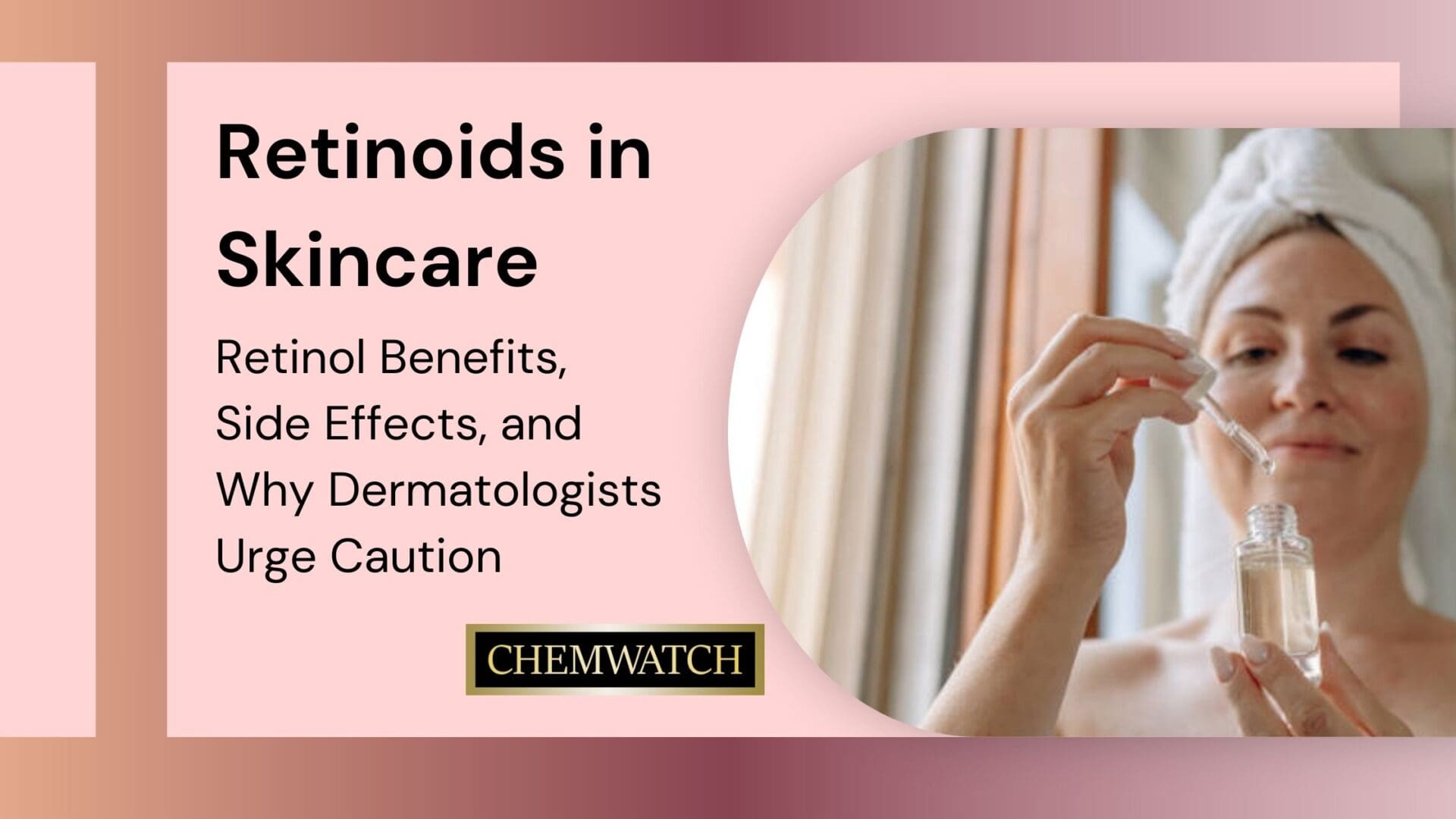
Walk into any beauty store today and you’ll likely see “retinol” or “retinoid” on serums, moisturisers, and eye treatments. From luxury counters to pharmacy shelves, these vitamin A skincare ingredients have become some of the most talked-about actives in modern routines.
But while retinoids in skincare are often promoted as a “gold standard” for acne and anti-ageing, dermatologists are increasingly urging consumers to avoid using them indiscriminately. To understand why, it helps to separate the proven retinol benefits from the very real retinoid side effects, and to learn how to use retinol safely.
Retinoids are derivatives of vitamin A that increase skin cell turnover and can stimulate collagen production. Those effects explain why retinoids in skincare are widely marketed for both retinol for acne and retinol for wrinkles.
Their popularity has surged in part because “active ingredient” skincare has become mainstream. Multi-step routines and trend-driven product layering (often influenced by social platforms) have pushed retinoids into everyday use, even for people who may not need them or whose skin barrier can’t tolerate them.
The result: many consumers treat retinoids like a basic moisturiser rather than a powerful active.
Despite the warnings around misuse, most dermatologists agree the retinol benefits (and broader retinoid benefits) are well supported when used appropriately:
These benefits explain why vitamin A skincare ingredients feature in both cosmetic lines and prescription dermatology.
Retinoids are effective… because they’re active. That means they can also be irritating, especially early on or when used too often. Common retinoid side effects include:
A major driver of problems is routine “stacking” (retinoid + acids + exfoliants) promoted as a fast path to results, when, for many people, it’s a fast path to retinol skin irritation.
Dermatologists are not anti-retinoid. The caution is about how retinoids in skincare are being used. In many cases, consumers:
There are also regulatory and safety considerations in some markets around retinol concentrations and overall vitamin A exposure. For people with very sensitive skin, eczema, or rosacea, retinoids may not be appropriate without professional guidance.
Used correctly, retinoids in skincare can still deliver meaningful results. Here’s how dermatologists commonly recommend how to use retinol safely:
This approach helps you keep the retinol benefits while minimising retinoid side effects like dryness, peeling, and retinol skin irritation.
Retinoids remain among the most studied and effective actives in dermatology. The key is not to abandon them, but to use them deliberately. When people treat retinoids in skincare as a universal daily “miracle ingredient,” irritation and barrier damage become far more likely.
With a slow start, consistent sun protection, and smart product pairing, many users can gain retinol benefits, including support for retinol for acne and retinol for wrinkles without turning their routine into a cycle of irritation and recovery.
At Chemwatch, we support safer product stewardship by helping organisations manage vitamin A skincare ingredients through better chemical transparency and compliance workflows. With tools for Safety Data Sheet (SDS) management, hazard communication, and chemical inventory oversight, Chemwatch helps brands and manufacturers assess ingredient risks, track formulation changes, and maintain consistent safety documentation, supporting informed decisions and safe-use guidance for consumers.
Resources