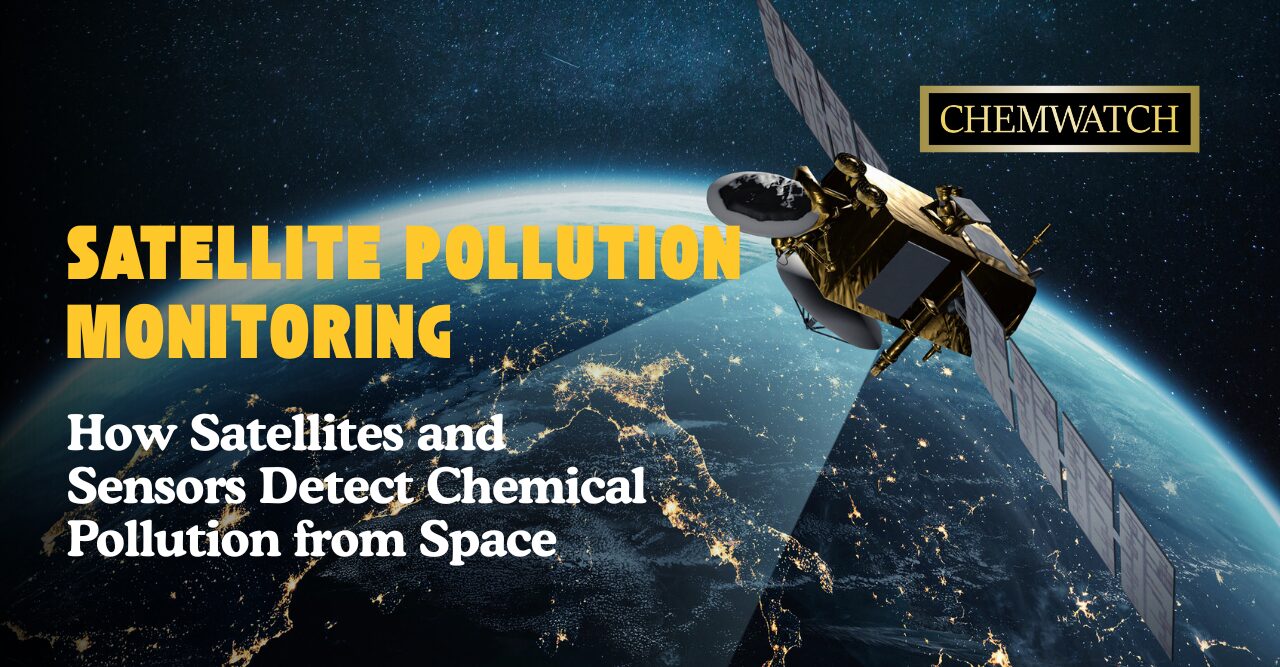
In recent years, satellite pollution monitoring has transformed how we understand air quality. Rather than relying solely on ground instruments, organisations now use remote sensing of air pollution and environmental monitoring satellites to detect atmospheric contaminants worldwide. The rise of satellite air‑quality monitoring gives us unprecedented global visibility, enabling rapid chemical pollution detection from space and more informed decision‑making in chemical safety.
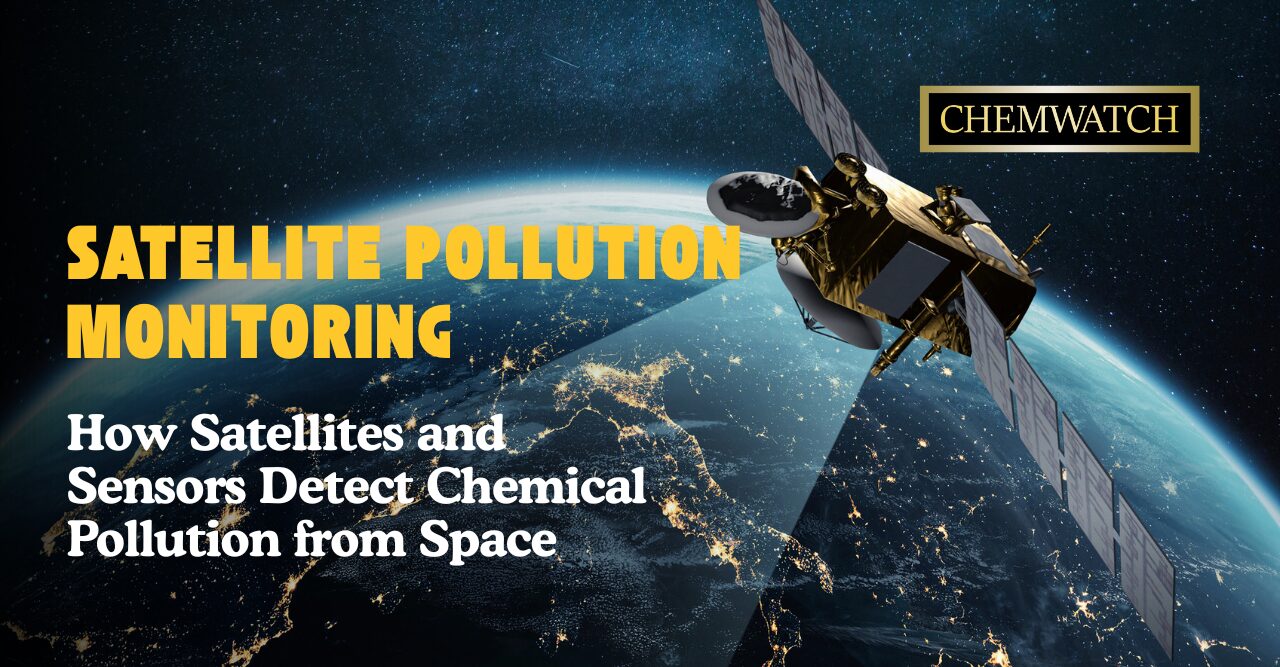
Modern environmental monitoring satellites detect a wide range of pollutants and greenhouse gases:
Because these satellites collect data frequently and consistently, they support the detection of pollution plumes, long‑range contaminant transport, industrial emissions, and wildfire smoke monitoring, even in areas without ground sensors.
Wide Coverage Where Ground Sensors Don’t Reach
Ground monitors remain essential, but limited coverage creates blind spots. Satellite pollution monitoring fills these gaps, providing global, high‑resolution views of air quality, emissions, and atmospheric chemistry.
Tracking Trends, Emissions, and Policy Impact
Long-term satellite datasets help measure emission trends, evaluate climate policy, and support regulatory analysis. With satellite air‑quality monitoring, organisations can track how pollution patterns evolve across years, or even decades.
Detecting Pollution Hotspots and Incidents
Environmental monitoring satellites support:
Supporting Public Health and Transparency
By combining satellite data with ground networks, scientists can estimate population exposure and health risk more accurately. This integrated framework strengthens environmental policy, urban planning, and public health initiatives.
Despite its advantages, remote sensing of air pollution has constraints:
For this reason, the most effective monitoring strategies integrate satellite remote sensing technology with ground and airborne sensors to achieve both broad coverage and local detail.
Advances in satellite remote sensing technology, machine learning, and data integration are rapidly expanding the capabilities of chemical pollution detection from space. For councils, regulators, industries and chemical‑safety teams, this shift creates new opportunities:
Satellite pollution monitoring is reshaping how we detect, assess, and respond to atmospheric contaminants, building a more proactive, data‑driven approach to environmental and occupational health.
As technology evolves, the invisible becomes visible: pollutants become measurable, hidden emissions become traceable, and air‑quality management enters a new era driven by global awareness and scientific precision.
At Chemwatch, we help organisations harness cutting-edge tools to support environmental compliance and chemical risk management. Our platform integrates real-time data, regulatory intelligence, emission tracking, and incident response. Whether you're managing atmospheric data, performing chemical leak detection, or ensuring compliance across global operations, Chemwatch offers the tools and expertise to keep your team informed and protected. Contact Us today!
Sources