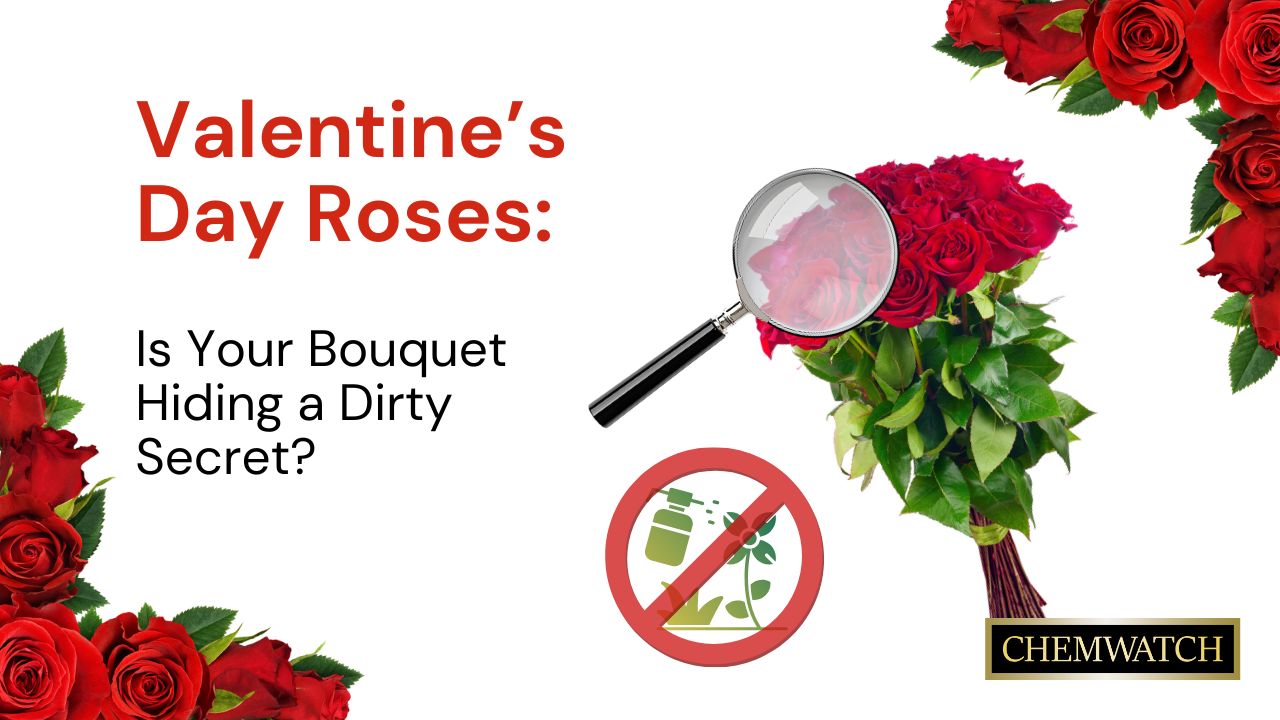
Valentine’s Day is the one day of the year when the world collectively speaks the language of flowers. Like every year, this year, roses were everywhere, overflowing from supermarket buckets, clutched by commuters, and arranged on candlelit tables. But have you ever stopped to wonder where do Valentine’s roses come from, and what might be travelling with them?
Before you take a deep sniff of that romantic bouquet, it’s worth looking at the global flower industry behind the perfect velvet-red rose. The truth is, Valentine’s Day roses pesticides are a real concern, because many cut bouquets carry pesticide residues on flowers that aren’t always obvious (or regulated) at the consumer level.
The demand spike each February 14 sends the flower industry into overdrive, and the scale is enormous. These Valentine’s Day flower statistics show just how globalised the supply chain has become:
So, the question becomes: did your bouquet travel 50 miles… or 5,000?
Despite their pristine look, many bouquets are treated with a chemical “cocktail.” Are roses sprayed with pesticides? In many commercial supply chains, yes, because roses are highly vulnerable to pests and diseases during cultivation and transport. And since flowers aren’t food, oversight can differ from edible crops, even though pesticide exposure from flowers is still possible through handling.
Investigations reported in major media have highlighted the issue of pesticide residues on flowers, including cases where bouquets contained multiple substances. Some findings have raised alarms about banned pesticides in UK/EU appearing in residue testing, depending on sourcing and supply-chain controls.
In short: the concern isn’t only what’s on the petals, it’s what workers and florists may be exposed to repeatedly.
For a consumer, contact may be brief. For florists and supply-chain workers, it’s daily. That difference matters. Health risks for florists can include:
When we talk about Valentine’s Day roses pesticides, this is where the issue becomes more than a “fun fact.” Repeated contact with treated stems, leaves, and packing materials can increase pesticide exposure from flowers, particularly when gloves, ventilation, or hygiene practices aren’t consistent.
Beyond chemical exposure, the environmental impact of cut flowers includes freight emissions, refrigeration, plastic wrapping, and intensive water and chemical inputs at scale. The global flower industry is a complex system, supporting livelihoods, but also creating sustainability trade-offs that are easy to overlook in a single bouquet.
You don’t have to skip flowers to be romantic, you can choose better options that reduce pesticide and environmental burdens. If you’re looking for sustainable Valentine’s Day gifts or eco-friendly Valentine’s flowers, consider:
Staying curious is the goal. Understanding where Valentine’s roses come from and the role of Valentine’s Day roses pesticides helps you make choices that are romantic and responsible.
Resources