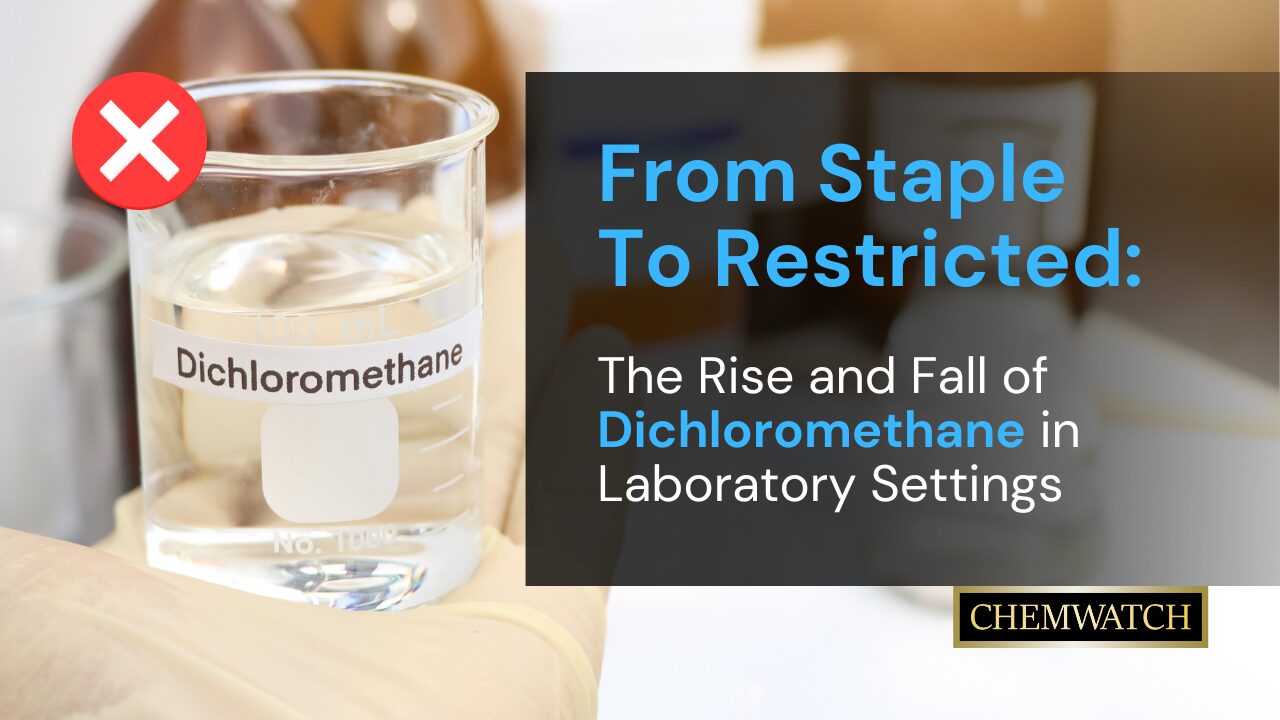
For decades, dichloromethane (DCM), also known as methylene chloride has been a laboratory staple. That familiarity is now being challenged by tightening methylene chloride regulations, driven by stronger evidence of serious health harms. For laboratory professionals, safety officers, and researchers, understanding what DCM is, how it has been used, why it is now classified as hazardous, and what comes next is no longer optional - it is a compliance imperative.
Dichloromethane (CH₂Cl₂; CAS 75-09-2) is a colourless chlorinated solvent with a low boiling point (~40°C) and mild sweet odour. Its solvating power, moderate polarity, and broad compatibility made it a default choice for many tasks in organic and analytical chemistry, often kept in bulk because it was used so frequently.
This same volatility, however, is central to DCM exposure risks: in lab settings, inhalation is commonly the main route of exposure, and DCM can reach hazardous airborne concentrations quickly without robust ventilation and work controls.
Across universities, pharmaceutical R&D, and industrial labs, DCM has been relied on for:
This breadth of use is exactly why laboratory chemical compliance is now a major challenge: DCM isn’t a niche solvent, it’s embedded across many SOPs and workflows.
The regulatory story has moved quickly. In May 2024, the US EPA finalised a rule under TSCA (effective 8 July 2024), concluding DCM poses an “unreasonable risk of injury to human health,” prohibiting most consumer uses and many commercial/industrial applications. Laboratory use is not outright banned, but it is now subject to strict conditions.
To continue using DCM, labs must implement a comprehensive Workplace Chemical Protection Program (WCPP), including:
This shift effectively turns DCM laboratory safety into an auditable program, monitoring-led, documented, and continuously maintained.
The EPA’s risk determination is grounded in evidence that DCM’s hazards can be severe, especially with repeated or uncontrolled exposure. The original article highlights key risk categories:
A critical complication for dichloromethane safetyis that odour is not a reliable warning sign. DCM’s volatility and exposure dynamics mean monitoring and controls (not smell) must guide safe work.
Evidence cited in the original copy links glyphosate exposure to disruption of aquatic ecosystems (including impacts to algal diversity, which underpins food webs), amphibian development effects at sub-lethal concentrations, and changes to microbial communities in sediments and soils. Soil microbiomes support nutrient cycling and plant health, and long-term glyphosate use has been associated with shifts in beneficial fungi and nitrogen-fixing bacteria populations.
If DCM use continues, the immediate priorities for laboratory chemical compliance are clear:
Even where DCM can technically remain in use, many labs are now prioritising substitution. The original copy notes several DCM alternatives being explored depending on application: ethyl acetate, cyclopentyl methyl ether (CPME), 2-methyltetrahydrofuran (2-MeTHF), and water-based systems where feasible.
Substitution needs to be fit-for-purpose: a “drop-in” replacement in chromatography may not be suitable for extractions or peptide chemistry, so most organisations approach transition in stages—starting with high-volume or highest-exposure tasks.
Chemwatch helps laboratories operationalise dichloromethane safety by keeping SDS libraries current, supporting risk assessments, and providing tools to document controls, training, and regulatory change impacts. As methylene chloride regulations tighten and WCPP-style requirements become the new baseline, Chemwatch helps teams maintain audit-ready records, identify where DCM appears across SOPs and inventories, and manage the transition to validated DCM alternatives without losing visibility or compliance.
Resources