When conflict escalates in the Middle East, the impact rarely stays local. For anyone working in plastics, packaging, manufacturing, or chemical procurement, the Iran conflict plastics industry story is also a story about petrochemical supply chain risk, volatility, and compliance pressure. A prolonged disruption can quickly become a global plastics supply chain disruption, affecting availability, pricing, and the ability to maintain safe, documented substitutions across complex supply networks.

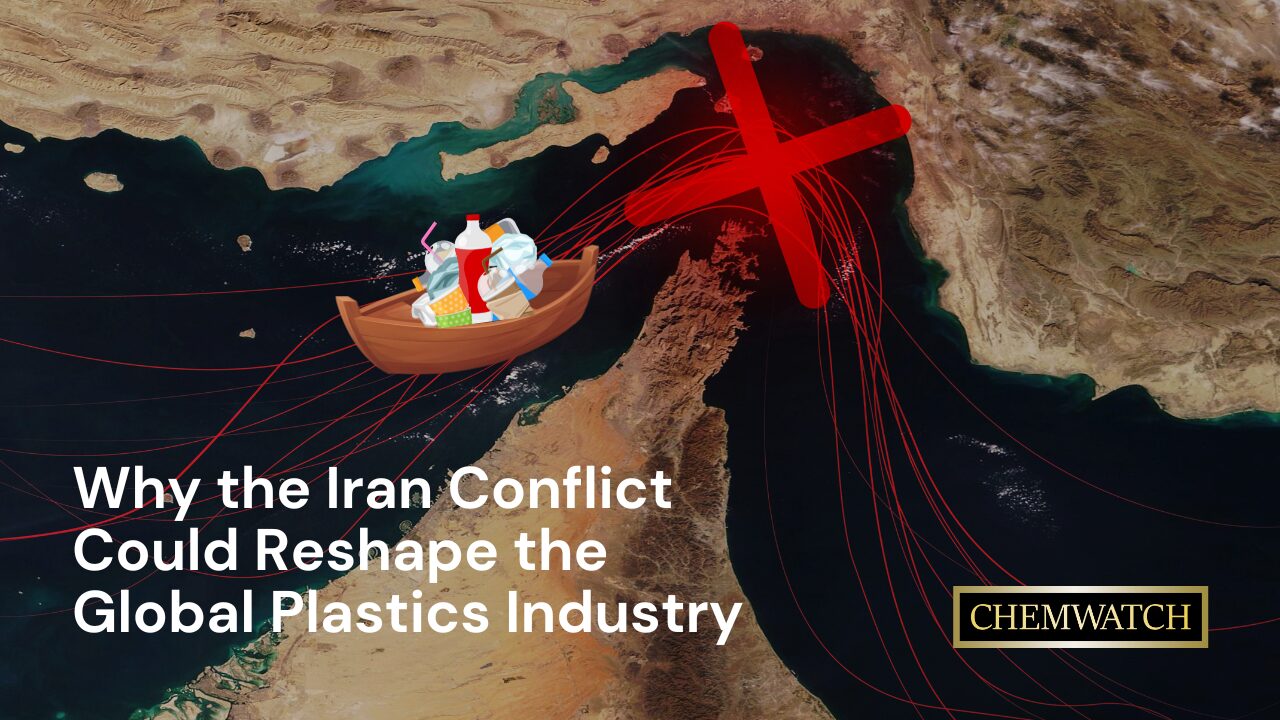
The biggest exposure point is the Strait of Hormuz petrochemicals corridor, a narrow passage linking the Persian Gulf to global shipping routes. Even minor restrictions can create disproportionate downstream impacts because so much petrochemical volume depends on this route for export access.
Industry reporting cited in the original copy notes that a significant share of Middle East polyethylene capacity relies on Hormuz access, alongside major volumes of methanol and ethylene glycol (a key precursor for PET and other resins). When this corridor is constrained, the result is immediate global plastics supply chain disruption, particularly for regions heavily dependent on Middle East exports.
Supply shocks don’t just reduce availability, they drive rapid repricing. In the article’s source material, resin prices are described as already surging by double digits, with crude oil price movements adding further pressure. This combination amplifies the oil price impact on plastics manufacturing, because polymer production costs track both feedstock and energy.
This is where we see knock-on effects like:
In practical terms, a plastic resin price increase becomes more than a budgeting issue, it’s a continuity issue, often forcing substitutions that raise both quality and safety risks.
The Middle East plays an outsized role in global polymer trade. The original copy highlights how key export volumes concentrate in this region, meaning any extended disruption to petrochemical exports Middle East can ripple into Europe and Asia particularly hard.
One consequence flagged is the potential for an ethylene glycol supply shortage, which can impact PET production and downstream packaging and textile supply chains, further intensifying petrochemical supply chain risk beyond just PE and PP.
Beyond pricing, the impact of war on plastics industry operations includes legal and operational shock events like force majeure. The original article notes multiple force majeure announcements affecting major sites and suppliers.
For manufacturers and distributors, this triggers a cascade:
This is where plastics industry geopolitical risk becomes a chemical safety issue, not just a market issue.
A prolonged disruption can also reshape strategy. The original copy points to pressure on recycling economics and narrowing spreads between virgin and recycled resins in some markets, suggesting the crisis may accelerate changes in sourcing and material selection.
Even if conditions stabilise, the market may not simply “snap back.” Once procurement teams diversify suppliers or increase recycled content to manage risk, those shifts can become long-term global resin market trends rather than temporary workarounds.
In a period of heightened petrochemical supply chain risk, practical steps include:
When a crisis drives sudden switching between suppliers and resin grades, documentation and compliance can lag behind operational reality. Chemwatch supports organisations navigating global plastics supply chain disruption by helping teams keep SDS libraries current, manage substitutions with clear hazard visibility, and maintain audit-ready chemical registers. In volatile periods, where plastic resin price increases and shortages push rapid change, integrated chemical safety management helps ensure decisions remain safe, compliant, and defensible, even as the outlook continues to shift.
Resources